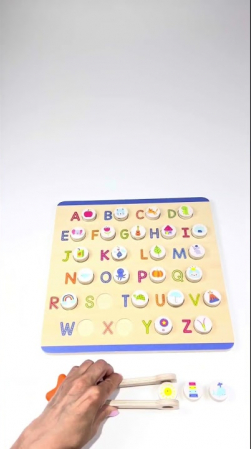
ABCs & Initial Letter Sounds Wooden Puzzle
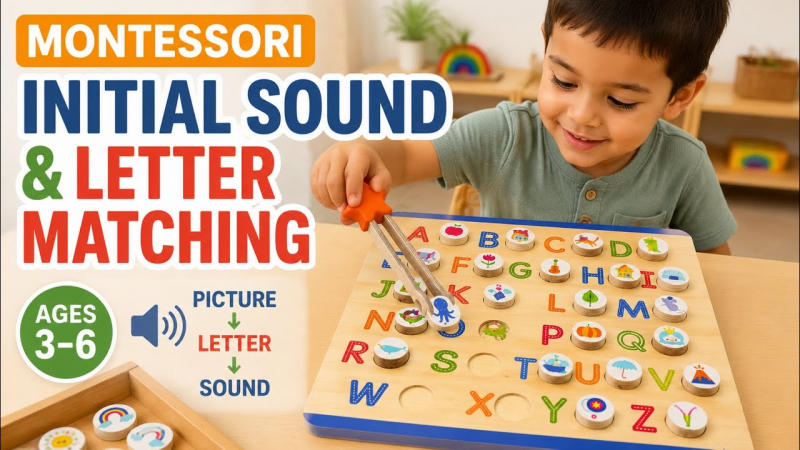
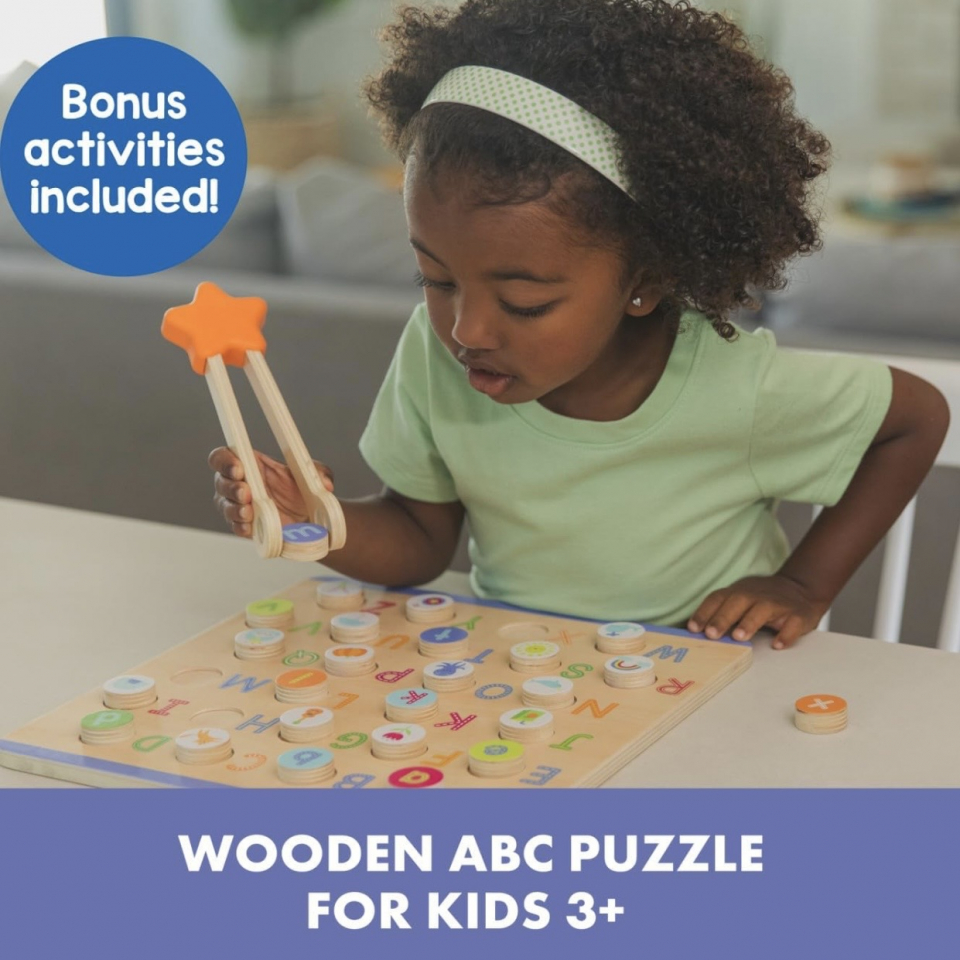
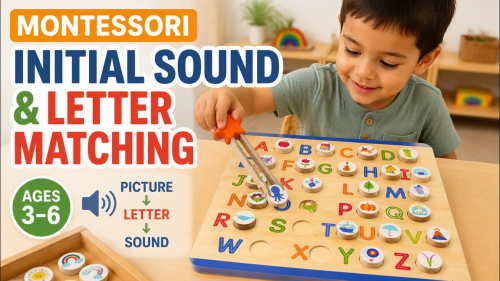
This wooden alphabet and initial letter sounds material supports early literacy development by helping children connect letters, sounds, and images through hands-on, structured activities.
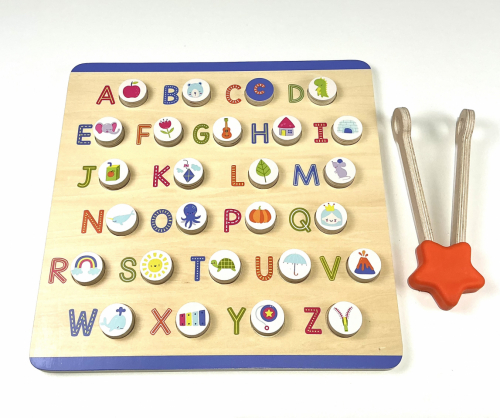
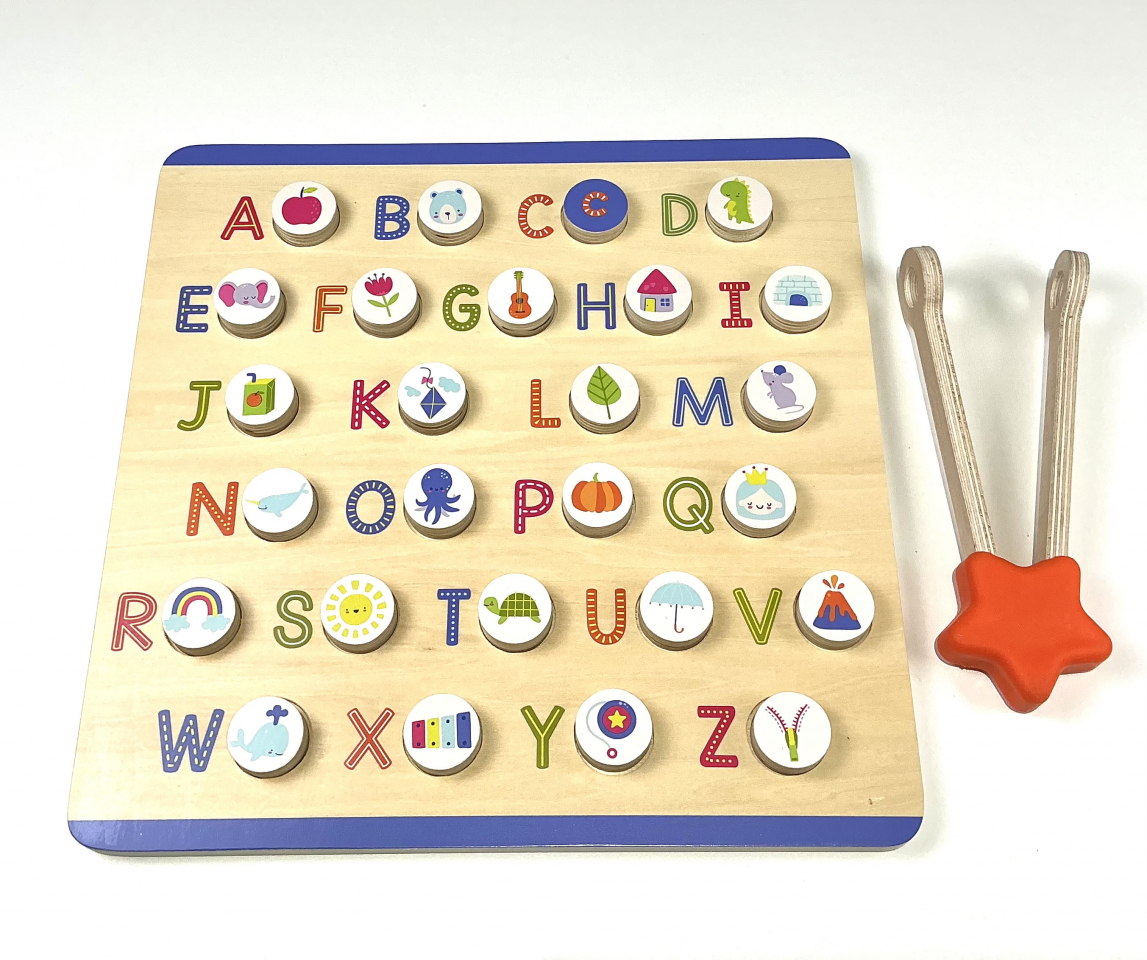
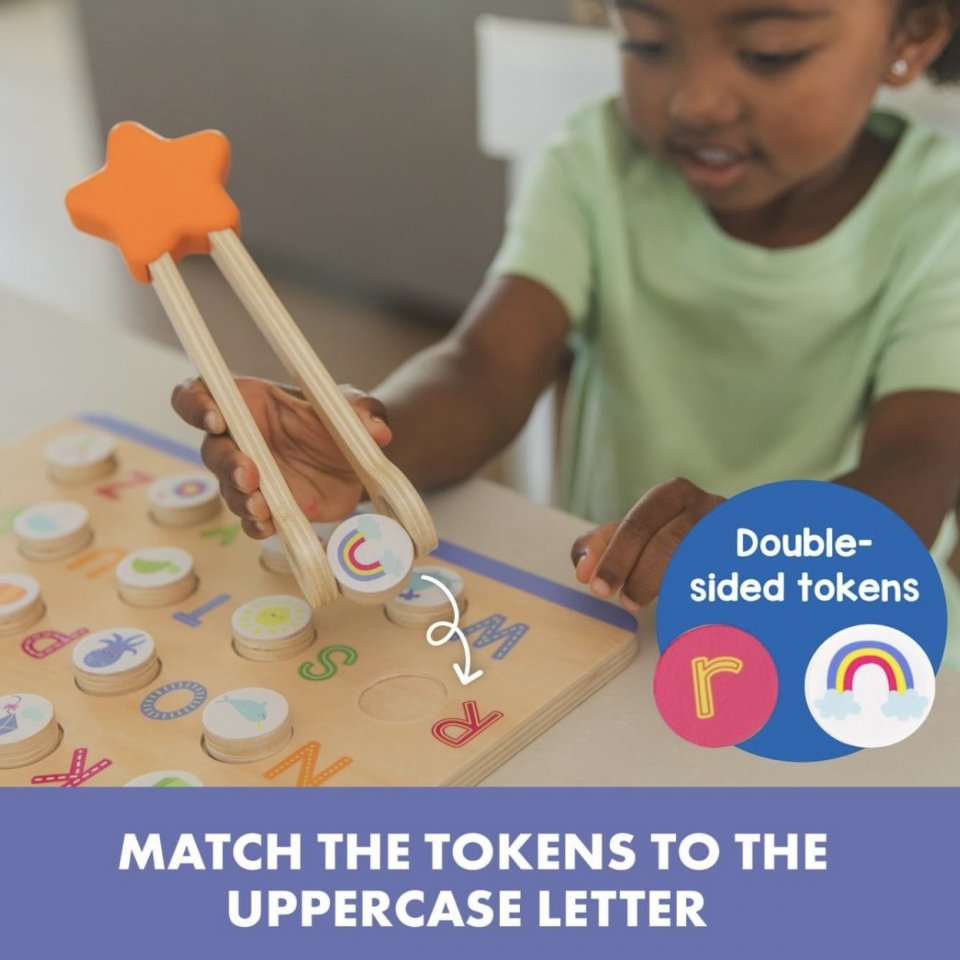
The set includes a wooden alphabet board with recessed spaces, 26 double-sided wooden tokens, and wooden tweezers. Each token is double-sided:
- one side shows a letter,
- the opposite side shows an illustration representing the initial letter sound (phonics cue).
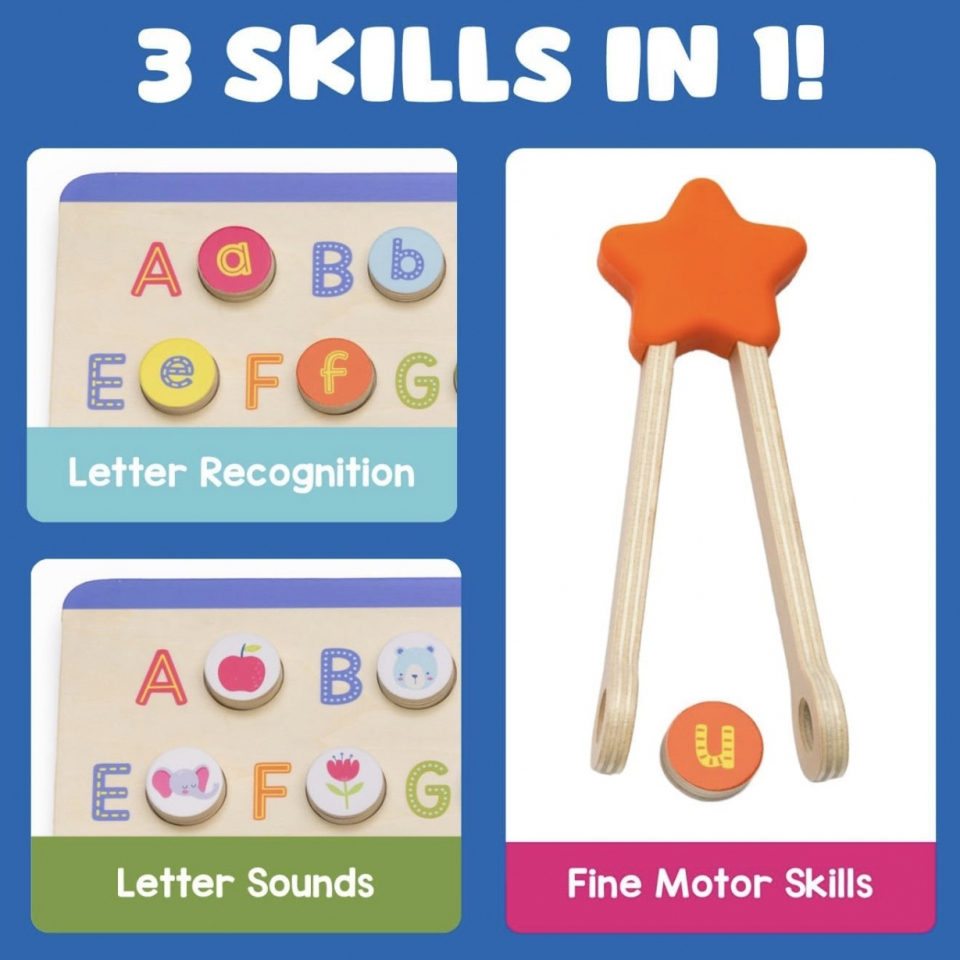
This design allows children to work with letter recognition, sound-symbol association, and early phonemic awareness using the same material.
What’s Included
- Wooden alphabet board with engraved uppercase letters
- 26 double-sided wooden tokens
- letter on one side
- picture representing the initial letter sound on the other side
- Wooden tweezers for fine motor practice
Activities
Free Exploration
The child explores the tokens freely, observing letters and pictures, naming objects, and discussing images. This activity builds vocabulary and familiarity with letters and symbols.
Letter Matching
With the letter side facing up, the child matches each token to the corresponding engraved uppercase letter on the board. This supports letter recognition and visual discrimination.
Uppercase and Lowercase Recognition
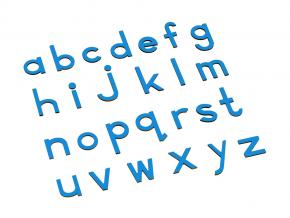
By flipping the tokens, the child works with different letter forms, strengthening recognition of both uppercase and lowercase letters.
Initial Letter Sounds (Phonics)
With the picture side facing up, each token represents the initial sound of a word (for example, “dinosaur”). The child identifies the picture, isolates the beginning sound, and matches it to the correct letter on the board. This activity develops phonemic awareness and sound-symbol association.
Fine Motor Activity with Tweezers
Using the wooden tweezers, the child picks up and places the tokens onto the board. This strengthens the pincer grasp, hand-eye coordination, and finger control, supporting preparation for writing.
This material progresses naturally from simple letter recognition to sound-based language work and can be used for independent practice, small-group activities, or guided lessons.
Made from durable wood with smooth, child-safe finishes, this material is ideal for Montessori classrooms, homeschool environments, and early learning centers.
Montessori Language Exercise Notes
Purpose
To introduce letter recognition, initial letter sounds, and sound-symbol association through concrete, hands-on work that supports phonemic awareness and prepares the child for reading.
Preparation
- Place the alphabet board on a low table or mat.
- Select a small number of tokens (3-5) for the first exercise.
- Begin with familiar letters and clear initial sound images.
Exercise: Letter Matching
- Invite the child to observe the alphabet board.
- Place one token with the letter side facing up.
- Slowly trace the engraved letter on the board with your finger and name the letter sound (not the letter name, if focusing on phonics).
- Invite the child to place the matching token onto the board.
- Repeat with a few letters, working left to right.
Exercise: Initial Letter Sounds
- Flip the selected tokens so the picture side is facing up.
- Name the object shown in the picture (for example, “dinosaur”).
- Emphasize the beginning sound (“/d/”).
- Ask the child to find the letter that makes that sound on the board.
- Place the token on the matching letter space.
Fine Motor Integration
Invite the child to use the wooden tweezers to pick up and place the tokens carefully. Encourage slow, controlled movements.
Control of Error
The engraved letters on the board provide a clear visual control of error. The child can self-correct by checking whether the token fits the correct letter space.
Extensions
- Limit the work to one sound family (for example, /b/, /c/, /d/).
- Invite the child to say additional words that start with the same sound.
- Use the tokens without the board for sound sorting or language games.
Notes for the Adult
- Work in short, calm sessions.
- Use precise language and clear pronunciation.
- Avoid correcting verbally; allow the material to guide self-correction.
Age: 3-5 years


Reviews for ABCs & Initial Letter Sounds Wooden Puzzle